Why Horses Lick and Chew
“When we slow down enough to listen, the smallest gestures reveal the deepest truths.” - unknown
Understanding a Subtle Sign of Release and Regulation
If you’ve spent time watching horses out in a herd or after a moment of tension, you’ve probably seen it: that quiet pause, followed by a lick and a chew.
It’s a gesture so ordinary that many overlook it, yet it carries deep meaning. Traditionally, this behavior was often labelled as submission: the horse “accepting” a lesson or showing obedience. But when we look through a trauma-informed, horse-centered lens, a different picture appears.
A Moment of Reset
Licking and chewing isn’t about giving in. It’s about letting go.
It’s a sign that the horse’s body is shifting out of a stress response, moving from a state of alertness back into calm.
Like humans, horses have a nervous system that constantly reads the world for cues of safety or threat. When they perceive something uncertain or stressful, their sympathetic nervous system activates: muscles tense, the heart rate rises, digestion pauses. Once the moment passes and safety returns, the parasympathetic system takes over again -the “rest and digest” state. That’s when we often see licking, chewing, sighing, or blinking.
It’s the body’s way of saying: "I’m okay now."
What It Can Tell You
The key however is always in the context.
A horse might lick and chew after:
A brief moment of tension or startle as their body processes the adrenaline.
A gentle release from pressure. When they feel understood and safe again.
A small success, when learning lands without overwhelm.
In healthy communication, the lick and chew is like a deep exhale. It tells you that the horse’s nervous system has had a chance to reset.
But sometimes, the same gesture can appear after something stressful or confusing. If pressure was high, timing was off, or the horse didn’t feel they had a choice, it can reflect relief that the moment ended rather than genuine relaxation. That’s why, as handlers, we look not only for the gesture itself, but for what came before it.
What I See in My Herd
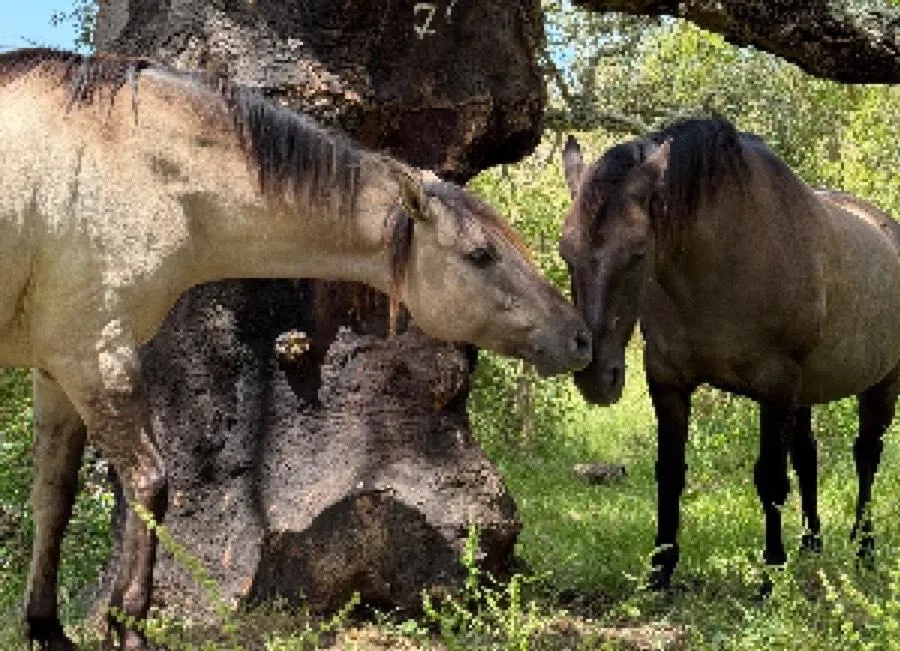
I often notice this dynamic play out in my own herd.
Sometimes, when one of the more dominant horses, usually Zorro or Peaches, sends another horse away from the water trough, there’s a clear moment of tension. Water is a resource that naturally carries more value, and even in a well-balanced herd, moments of scarcity can stir up small disagreements.
If it’s Jiya, my young, confident mare, who’s being asked to move, she won’t always leave immediately. She’ll hesitate, hold her ground for a breath, then finally step aside with a toss of her head.
What happens next always fascinates me.
After the incident, Jiya will lick and chew, processing the moment, coming back to calm. But so will the horse who sent her away. Even the dominant horse, the one who “won” that little exchange, will often let out a deep sigh, lower their head slightly, and begin to lick and chew as well.
Especially if the moment took more energy than usual, the release is visible in both of them.
It’s as if they’re both saying: "That was a lot, but we’re okay now."
These small exchanges happen countless times a day in a herd. They’re not signs of ongoing conflict but of healthy emotional regulation. Each horse, in their own way, is finding their way back to balance.

Now again, It’s not about winning or losing.
It’s about releasing tension and restoring harmony.
Horses evolved as social, cooperative beings. These small resets help the herd maintain balance and trust after moments of intensity. It’s their way of saying,we’re okay again.
When Humans Enter the Picture
When we interact with horses, our presence becomes part of their emotional landscape. Our tone, our breath, even our posture, all of it communicates something.
So when a horse licks and chews after being with us, it’s helpful to ask:
Did this come after confusion or fear, or after understanding?
Did my horse feel seen, or simply relieved that the pressure stopped?
Am I giving them time and choice to process what just happened?
In a trauma-informed approach, licking and chewing isn’t a cue to move on or a signal of success. It’s an invitation to slow down, stay soft, and let the nervous system settle before asking for more.
How to Support This Process
You can foster natural regulation by:
Allowing space and stillness after moments of tension.
Releasing pressure before the horse reaches overwhelm.
Watching for other signs of safety like soft eyes, relaxed jaw, rhythmic breathing.
Offering quiet companionship instead of immediately re-engaging.
These pauses are not wasted time; they’re where true learning and trust take root.
The Takeaway
Licking and chewing is more than a behavioral tick. It’s a glimpse into your horse’s inner world. A sign of integration, release, and returning to safety.
When we understand it for what it truly is, we move beyond seeing horses as performers of tasks and begin to meet them as sentient beings who process, feel, and communicate in every subtle movement.
So next time you see your horse lick and chew, take a breath with them.
Let that moment remind you that calm doesn’t come from control.
It comes from safety, understanding, and shared presence.
♡


