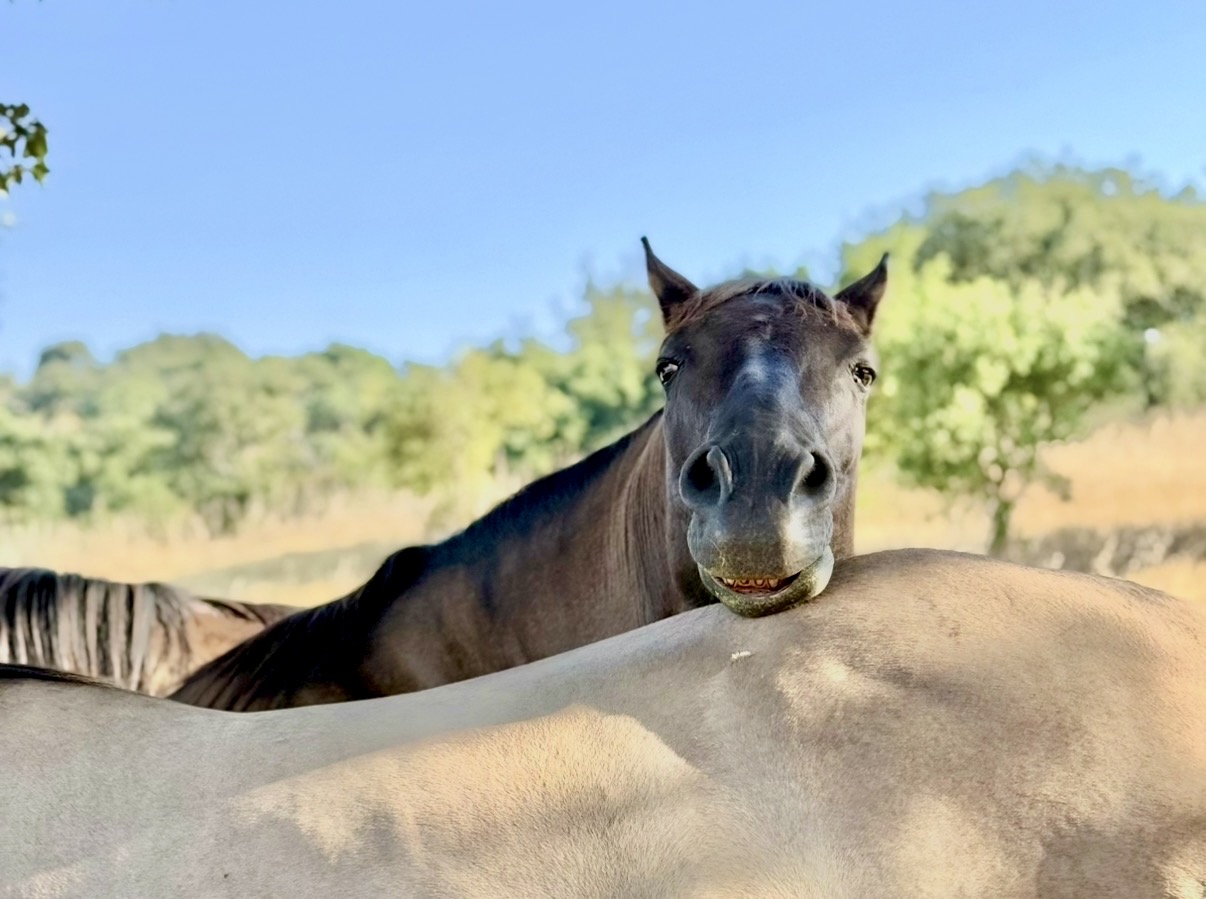
Can you be experienced with horses and still not understand them?
“Getting through it and being okay are not the same thing.”
I didn't want to compete. I didn't want to practice in an arena or perfect my transitions or work toward any kind of performance. I just wanted to get on my horse and disappear into nature. Feel the wind. Hear the birds. Move through the landscape on horseback and actually be there, in it, being part of it.
That was the whole dream. Simple, really.
Gemma was my horse for that. A quarter horse, solid and willing, bred for work and steady on the trail. I'd had her since she was six months old and started riding her around six years of age. She knew the land, she knew me, and when things were good between us, there was nothing better.
Getting to "things were good" just took a while.
Every time.
The routine had become so normal I barely questioned it. I'd tack her up, take her out with her horse friend, and for the first twenty minutes I'd walk beside her rather than ride her. She'd be tense, circling around me, blocking my path, trying to persuade me, kindly, always kindly to turn back. I'd stay calm, hold steady on the halter rope with an even pressure if she resisted, until she moved forward, then release. Reward the forward step. All textbook stuff. I knew what I was doing.
Sometimes, after about twenty minutes, she'd rear up once, sharp and sudden, and then something would shift and I could get on and we'd go. Other times I'd judge she was settled enough and mount without the rear. Either way, eventually we'd be moving, following the other horses out onto the trail, and within a little while Gemma would ease into it and we'd find our rhythm.
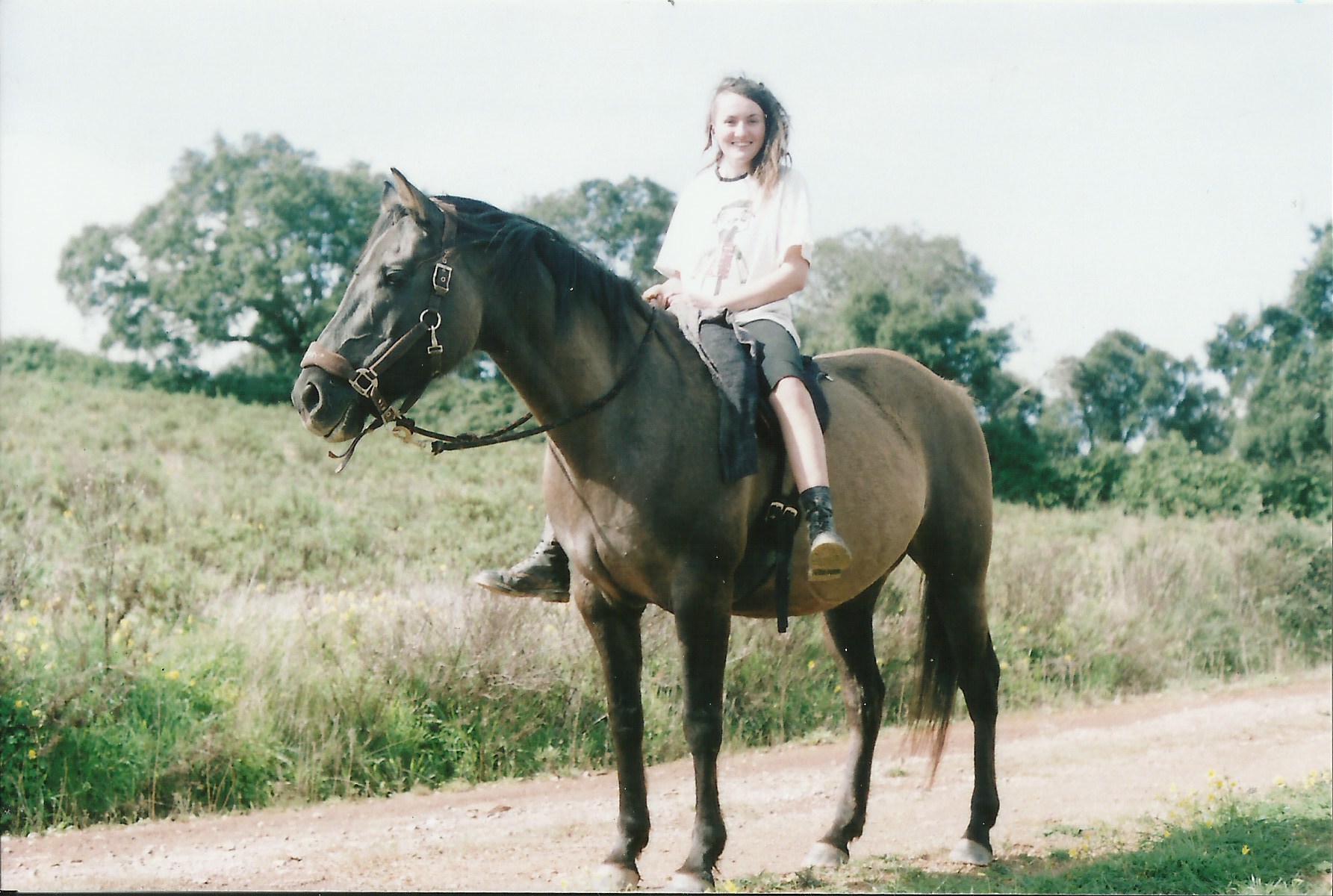
Gemma, back in the day.
And then it was everything I'd wanted. The wind, the birds, the trees. Both of us moving together through the landscape. By the end of the ride I felt the exhilaration of it all. And the accomplishment, with so much joy. Even though Gemma actually seemed to be relieved to be back home again. Even so, I told myself that counted for something. And it did.
I just didn't know yet that "getting through it" and "being okay" are not the same thing.
Somewhere underneath my calm, capable exterior - and I was capable, I want to be clear about that - there was a quiet guilt. I wasn't consistent enough. I'd let weeks go by and then decided today was the day, asking her to go from zero to trail ride with no gradual re-entry, no real preparation...
There was annoyance too. Why did it have to be this hard every time? And something else I didn't quite say out loud...., that I wasn't completely sure what she'd do this time. How bad the resistance would be. That I was managing a risk I hadn't fully named. That the twenty minutes on the ground wasn't a warm-up. It was me waiting for her to exhaust her objections.
When I look back at Gemma in those moments now, I feel sad.
Not because I was cruel - I wasn't.
Not because I didn't care - I did, deeply.
But because I didn't see her properly. She was telling me every single time that she wasn't ready. That she needed more time, more support. And I thought I knew best. I thought I was handling it.
I just had no idea what she was saying.
And then something found me. I can't even tell you exactly how - a book, a course, something that crossed my path at the right moment the way the right things tend to find you when you're finally ready to receive them. Rachaël Draaisma's work on body language and calming signals in horses. And just like that, I became a beginner again.
I don't mean that as a defeat. I mean it as one of the best things that has ever happened to me.
Here's what made it even stranger: I already knew about calming signals. I'd encountered them years earlier in the dog world, had learned to recognize them, understood the concept. But I'd filed it away under "dog behaviour" without ever thinking to ask whether the filing system itself was wrong. It took Draaisma's work to make me see that these aren't dog-specific quirks. They're nervous system responses. They're what living beings do when they're trying to cope, communicate, and find safety. Dogs. Horses. Humans. All of us, doing the same thing in our own language.
It seems so obvious now. It was completely invisible to me then.
There's a particular kind of humbling that comes, not when you're new to something, but when you're experienced - when you've built real competence, real confidence and you discover there's an entire dimension you've been missing. It doesn't feel like failure. It feels like a door opening. Like becoming a beginner again, but with everything you've already learned still intact, suddenly useful in a completely new way.
Suddenly I had a language for what Gemma had been communicating all along. The worry wrinkles. The circling. The way she'd rather have turned back. These weren't problems to manage. They were signals. And I hadn't been able to read them so clearly until then.
Sometimes we don't know what we don't know. We find what works well enough, we build our toolkit, we get through the ride. And we're not wrong to feel proud of that. It takes skill and patience and love.
But there's a difference between managing and understanding. And I didn't know that difference existed until I found it.
What surprised me most was how far it reached. This way of seeing; it didn't stay in the horse paddock. It changed how I observe everything. My horses, yes. But also the people around me. Myself. It became less a technique and more a way of moving through the world. Slower. More curious. Actually looking.
If you're experienced with horses and things are mostly working, then this is for you especially. Not because you're doing it wrong. But because there might be a whole conversation happening that you don't yet have the words for.
Gemma was always talking. I just needed to learn how to listen.
♡
If this story resonates with you - if you’ve ever questioned what your horse is communicating, or felt that quiet discomfort in your gut - you’re not alone. There is another way. One that begins with listening. With understanding. With slowing down. With consent.
And that’s where the real connection begins.


